
Discover GCC Jobs That Move Your Career Forward
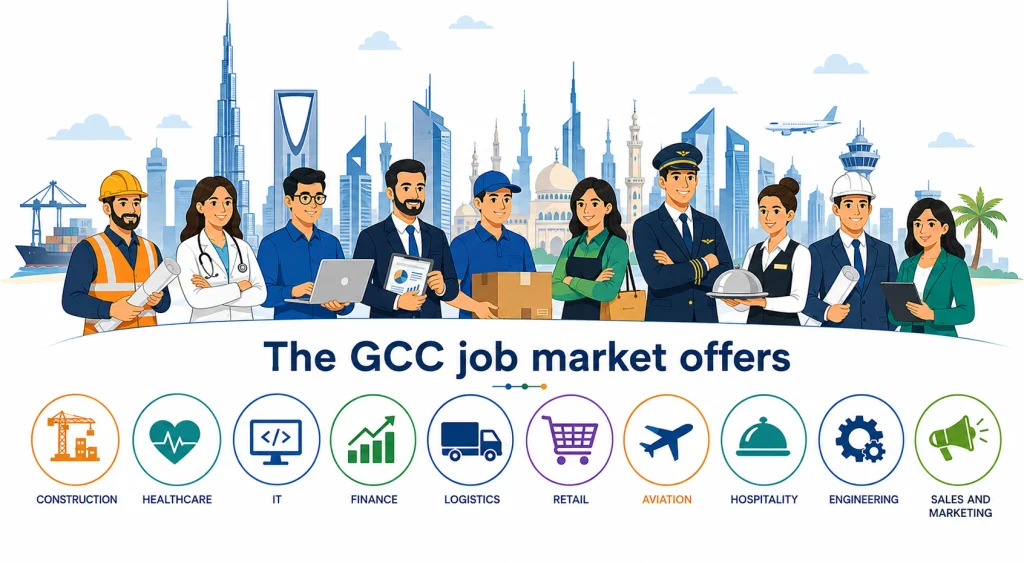
The Gulf Cooperation Council (GCC) continues to be one of the world’s most attractive regions for job seekers and professionals. With strong economies, tax-friendly employment environments in many countries, modern infrastructure, and ambitious development projects, the GCC offers thousands of opportunities for people looking to advance their careers and build a stronger financial future.
Whether you’re a fresh graduate, an experienced professional, or a skilled worker searching for your next opportunity, the GCC job market offers career options across a wide range of industries. From the UAE and Saudi Arabia to Qatar, Kuwait, Oman, and Bahrain, employers are actively seeking talent in sectors such as construction, healthcare, IT, finance, logistics, retail, aviation, hospitality, engineering, and sales and marketing.
Many employers also provide attractive benefits such as accommodation, transportation, medical insurance, annual leave, air tickets, and other employment benefits, depending on the role and country. These advantages, combined with the region’s growing economies and international business environment, make the GCC an excellent destination for career development and professional growth.
GCC Job Market Overview 2026
The GCC economy continues to expand through economic diversification, foreign investment, tourism, technology, infrastructure development, and major national transformation projects. As businesses grow and new projects are launched, demand for qualified and motivated workers continues across multiple industries.
Key Factors Driving Job Growth
- Expansion of multinational companies creating new career opportunities
- Large-scale infrastructure and development projects generating demand for skilled workers
- Growth in tourism, hospitality, and aviation creating thousands of new roles
- Digital transformation and technology investment increasing demand for IT and digital professionals
- Growing healthcare services creating opportunities for medical and support professionals
- Construction and real estate expansion driving demand for engineers, technicians, supervisors, and workers
- Growth of logistics and supply chain industries creating opportunities across the region
- Economic diversification initiatives opening new career paths beyond traditional industries
Ready to Build Your Career in the GCC?
Whether you’re looking for your first job, a better salary, or your next career move, the GCC offers opportunities for a wide range of skills and experience levels.
Explore the latest GCC job vacancies, discover in-demand careers, improve your skills, and find opportunities that match your experience and career goals.
1. Information Technology and AI Jobs in the GCC
Demand Level: Very High | Career Outlook: Excellent
The GCC technology and AI job market is expanding rapidly, creating exciting opportunities for professionals who want to build high-growth careers in the region. As businesses across the UAE, Saudi Arabia, Qatar, Kuwait, Bahrain, and Oman accelerate digital transformation, demand for software developers, AI specialists, cybersecurity professionals, cloud engineers, and data experts continues to rise.
Technology is no longer simply a support function—it has become a core part of business growth and competitiveness. Artificial intelligence, cloud computing, cybersecurity, automation, and data analytics are transforming how GCC companies operate and creating new career paths for both experienced professionals and ambitious newcomers.
AI is particularly gaining momentum. Generative AI and Large Language Model (LLM) skills are becoming increasingly valuable, with organizations investing heavily in AI-powered products, automation, and intelligent business solutions.
Why Choose a Technology or AI Career in the GCC?
A career in IT and AI can offer more than an attractive salary. Professionals can benefit from:
- Strong demand for specialized technology skills
- Competitive salary packages
- Opportunities with multinational companies and major regional organizations
- Exposure to cutting-edge AI and digital technologies
- Opportunities to work on large-scale transformation projects
- Career progression into senior technical and management positions
- Additional benefits such as medical insurance, annual leave, bonuses, and other allowances, depending on the employer
For candidates willing to continuously upgrade their skills, technology can be one of the most rewarding career paths in the GCC.
Most In-Demand IT and AI Jobs in the GCC
| Role | Junior (AED/mo) | Mid-Level (AED/mo) | Senior (AED/mo) | Demand |
|---|---|---|---|---|
| Software Engineer | 8,000–15,000 | 15,000–28,000 | 28,000–55,000 | Very High |
| AI/ML Engineer | 15,000–25,000 | 25,000–45,000 | 45,000–80,000 | Extreme |
| Cybersecurity Analyst | 10,000–18,000 | 18,000–30,000 | 30,000–50,000 | Very High |
| Cloud Engineer | 12,000–20,000 | 20,000–35,000 | 35,000–55,000 | Very High |
| Data Scientist | 12,000–22,000 | 22,000–40,000 | 40,000–65,000 | High |
| DevOps Engineer | 10,000–18,000 | 18,000–32,000 | 32,000–50,000 | High |
| Prompt Engineer | 12,000–20,000 | 20,000–35,000 | 35,000–60,000 | Extreme |
Salary ranges are indicative and can vary significantly by country, employer, qualifications, experience, and specialization.
Roles and Responsibilities
Technology professionals play an important role in helping GCC businesses become more efficient, secure, and competitive. Depending on the position, responsibilities may include:
- Software Development – Designing, developing, testing, and maintaining websites, applications, and business software.
- AI and Machine Learning – Building intelligent systems, developing AI models, working with LLMs, and automating business processes.
- Cybersecurity – Protecting company systems, networks, applications, and data from cyber threats.
- Cloud Computing – Designing and managing cloud infrastructure using platforms such as AWS, Microsoft Azure, and Google Cloud.
- Data Analytics – Analyzing large datasets and transforming information into valuable business insights.
- DevOps and Automation – Improving software delivery through CI/CD, containerization, monitoring, and infrastructure automation.
- Technical Support and Optimization – Maintaining systems, resolving technical issues, and improving technology performance.
Successful IT professionals need more than technical knowledge. Problem-solving, communication, teamwork, adaptability, and an understanding of business objectives are increasingly important in today’s GCC job market.
Skills Employers Are Looking For
To stand out in the competitive GCC technology market, candidates should develop a combination of technical and professional skills.
Core Technical Skills
- Python, Java, JavaScript, and C#
- React, Angular, and Vue.js
- AWS, Microsoft Azure, and Google Cloud
- TensorFlow, PyTorch, and modern LLM frameworks
- SQL and NoSQL databases
- Docker and Kubernetes
- CI/CD and DevOps
- Cybersecurity and network security
- Data analytics and machine learning
Key Certifications
Professional certifications can strengthen your CV and demonstrate practical expertise. Popular options include:
- AWS Solutions Architect
- Microsoft Azure certifications
- CompTIA Security+
- Google Data Analytics
- Certified Kubernetes Administrator (CKA)
- Professional cybersecurity and cloud certifications
Qualifications and Requirements
Requirements vary depending on the position, but many GCC technology employers look for:
- Bachelor’s degree or relevant technical qualification
- Strong knowledge of the technologies required for the role
- Relevant professional certifications
- Practical project or industry experience
- Strong English communication skills
- Problem-solving and analytical abilities
- Ability to work effectively in a multicultural environment
For entry-level candidates, a strong portfolio can be just as valuable as formal experience. Personal projects, GitHub repositories, internships, certifications, and demonstrable technical skills can help you attract employers and secure your first opportunity.
Career Growth and Future Opportunities
One of the biggest advantages of an IT or AI career is the potential for continuous growth. Technology professionals can progress from entry-level positions into specialized and leadership roles as they gain experience and develop new skills.
A typical career path could include:
Junior Developer → Software Engineer → Senior Engineer → Technical Lead → Engineering Manager
AI professionals may progress from:
Junior AI/ML Engineer → AI Engineer → Senior AI Engineer → AI Architect → AI/Technology Leader
Similarly, cybersecurity and cloud professionals can advance into highly specialized and managerial positions.
With the rapid adoption of AI, cloud computing, automation, cybersecurity, and digital transformation across the GCC, professionals who continuously update their skills can position themselves for long-term career growth.
2. Healthcare and Medical Jobs in the GCC
Demand Level: Very High | Career Outlook: Excellent
The GCC healthcare sector is experiencing strong and sustained growth, creating exciting opportunities for doctors, nurses, pharmacists, medical technicians, therapists, healthcare administrators, and other healthcare professionals.
Across the UAE, Saudi Arabia, Qatar, Kuwait, Bahrain, and Oman, governments and private healthcare organizations are investing heavily in hospitals, specialized medical centers, preventive care, digital health, and advanced medical technologies. As populations grow and healthcare services become more specialized, the need for qualified medical professionals continues to increase.
For healthcare professionals seeking competitive salaries, modern medical facilities, international work experience, and long-term career growth, the GCC offers an attractive environment to develop their careers.
Why Choose a Healthcare Career in the GCC?
A healthcare career in the GCC can provide opportunities to work in modern hospitals, specialist clinics, healthcare groups, laboratories, and medical centers. Depending on the employer and position, professionals may also receive attractive employment benefits such as:
- Competitive salary packages
- Medical insurance
- Annual leave and air tickets
- Accommodation or housing allowance
- Transportation allowance
- Performance bonuses
- Professional development and training opportunities
- Opportunities to work with international healthcare teams
With continued investment in healthcare infrastructure, qualified professionals with the right licenses, experience, and specialized skills can access excellent career opportunities across the region.
Most In-Demand Healthcare and Medical Jobs
| Role | Junior (AED/mo) | Mid-Level (AED/mo) | Senior (AED/mo) | Demand |
|---|---|---|---|---|
| Registered Nurse | 5,000–9,000 | 9,000–15,000 | 15,000–22,000 | Very High |
| General Practitioner | 12,000–20,000 | 20,000–30,000 | 30,000–45,000 | Very High |
| Specialist Doctor | 20,000–35,000 | 35,000–50,000 | 50,000–80,000+ | Extreme |
| Pharmacist | 6,000–10,000 | 10,000–16,000 | 16,000–25,000 | High |
| Medical Laboratory Technician | 5,000–9,000 | 9,000–14,000 | 14,000–20,000 | High |
| Radiology Technician | 6,000–10,000 | 10,000–16,000 | 16,000–23,000 | High |
| Physiotherapist | 6,000–10,000 | 10,000–16,000 | 16,000–24,000 | High |
| Medical Coder | 5,000–8,000 | 8,000–13,000 | 13,000–18,000 | High |
| Healthcare Administrator | 6,000–10,000 | 10,000–18,000 | 18,000–28,000 | High |
Salary ranges are indicative and may vary by GCC country, employer, professional license, specialization, qualifications, and experience.
Roles and Responsibilities
Healthcare professionals have a direct impact on patient care, safety, and the overall quality of healthcare services. Responsibilities vary by profession but may include:
- Patient Care – Assessing patients, providing treatment, monitoring recovery, and ensuring patient safety.
- Diagnosis and Treatment – Supporting diagnosis, developing treatment plans, and delivering appropriate medical care.
- Medication Management – Dispensing medications, advising patients, and ensuring safe pharmaceutical practices.
- Medical Testing – Conducting laboratory, imaging, and diagnostic procedures accurately and safely.
- Patient Support – Educating patients and families about treatments, medications, recovery, and preventive healthcare.
- Healthcare Administration – Managing appointments, medical records, insurance processes, compliance, and healthcare operations.
- Technology and Digital Health – Using electronic medical records, telemedicine platforms, healthcare software, and modern medical technologies.
Healthcare employers increasingly value professionals who combine technical expertise with communication, compassion, teamwork, attention to detail, and strong patient-care skills.
Skills Employers Are Looking For
To succeed in the GCC healthcare market, professionals should develop both clinical expertise and strong professional skills.
Core Professional Skills
- Patient assessment and clinical care
- Medical terminology
- Patient safety and infection control
- Emergency and critical care skills
- Medical documentation
- Healthcare technology and electronic medical records
- Communication and interpersonal skills
- Teamwork and leadership
- Knowledge of healthcare regulations and compliance
- Ability to work in multicultural environments
Specialized skills in areas such as critical care, emergency medicine, oncology, cardiology, pediatrics, radiology, laboratory medicine, mental health, and digital healthcare can further improve career opportunities.
Qualifications and Licensing Requirements
Healthcare is a regulated profession in the GCC, and requirements vary by country and profession. Depending on the role, candidates may need:
- Relevant medical, nursing, pharmacy, or healthcare qualification
- Professional experience
- Valid professional registration or license
- Primary source verification and document authentication where required
- Relevant certifications
- Good English communication skills
- Additional training or specialization for certain positions
Professionals should always check the specific licensing and registration requirements of the GCC country and healthcare authority where they plan to work.
Career Growth and Future Opportunities
Healthcare offers strong long-term career potential for professionals who continue to develop their expertise.
A nursing career, for example, can progress from:
Staff Nurse → Senior Nurse → Nurse Supervisor → Nurse Manager → Director of Nursing
Medical professionals can progress from:
General Practitioner → Specialist → Senior Specialist → Consultant → Medical Director
Other healthcare professionals can also move into specialized clinical roles, management, healthcare quality, medical education, research, healthcare technology, and hospital administration.
As GCC countries continue investing in healthcare infrastructure, preventive medicine, specialized care, and digital health, professionals who keep their qualifications and skills up to date can position themselves for long-term career growth and better employment opportunities.
3. Engineering and Construction Jobs in the GCC
Demand Level: Very High | Career Outlook: Excellent
The GCC engineering and construction sector continues to be one of the region’s biggest sources of employment, driven by major infrastructure investments, real estate development, energy projects, transportation networks, and ambitious national development programs.
Across the UAE, Saudi Arabia, Qatar, Kuwait, Bahrain, and Oman, billions of dollars are being invested in smart cities, residential communities, commercial developments, highways, airports, rail networks, renewable energy projects, industrial facilities, and large-scale infrastructure.
For engineers, architects, project managers, technicians, supervisors, and skilled construction workers, the GCC offers opportunities to work on some of the region’s most ambitious projects while developing valuable international experience.
Why Choose an Engineering or Construction Career in the GCC?
The construction and engineering industry offers opportunities for professionals with different qualifications and experience levels. From entry-level technical positions to senior engineering and project management roles, there are multiple career paths to explore.
Depending on the employer and position, employees may also receive benefits such as:
- Competitive salary packages
- Accommodation or housing allowance
- Transportation allowance
- Medical insurance
- Annual leave and return air tickets
- Performance bonuses
- Overtime payments for eligible positions
- Training and professional development opportunities
- Opportunities to work on major international projects
With continuous infrastructure development across the region, skilled engineering and construction professionals remain highly valuable to GCC employers.
Most In-Demand Engineering and Construction Jobs
| Role | Junior (AED/mo) | Mid-Level (AED/mo) | Senior (AED/mo) | Demand |
|---|---|---|---|---|
| Civil Engineer | 7,000–12,000 | 12,000–22,000 | 22,000–40,000 | Very High |
| Mechanical Engineer | 7,000–12,000 | 12,000–22,000 | 22,000–38,000 | High |
| Electrical Engineer | 7,000–13,000 | 13,000–23,000 | 23,000–40,000 | Very High |
| Structural Engineer | 8,000–14,000 | 14,000–25,000 | 25,000–42,000 | High |
| Project Manager | 12,000–20,000 | 20,000–35,000 | 35,000–60,000+ | Extreme |
| Quantity Surveyor | 7,000–12,000 | 12,000–20,000 | 20,000–32,000 | High |
| Site Engineer | 6,000–10,000 | 10,000–18,000 | 18,000–28,000 | Very High |
| HSE Engineer | 7,000–12,000 | 12,000–20,000 | 20,000–32,000 | Very High |
| Construction Supervisor | 5,000–9,000 | 9,000–15,000 | 15,000–24,000 | Very High |
| Skilled Technician | 3,000–6,000 | 6,000–10,000 | 10,000–16,000 | High |
Salary ranges are indicative and may vary by GCC country, employer, project, qualifications, professional registration, specialization, and experience.
Roles and Responsibilities
Engineering and construction professionals are responsible for planning, designing, executing, supervising, and delivering projects safely and efficiently. Responsibilities vary by position but may include:
- Project Planning – Developing project schedules, budgets, resource plans, and execution strategies.
- Engineering and Design – Preparing designs, technical drawings, calculations, specifications, and engineering solutions.
- Site Management – Supervising construction activities and ensuring work is completed according to approved plans and specifications.
- Quality Control – Inspecting materials and workmanship to ensure projects meet required quality standards.
- Health and Safety – Implementing safety procedures, conducting inspections, and ensuring compliance with HSE requirements.
- Cost and Quantity Management – Preparing estimates, monitoring costs, measuring quantities, and supporting procurement activities.
- Team Coordination – Working with contractors, consultants, suppliers, engineers, technicians, and project stakeholders.
- Project Delivery – Ensuring projects are completed safely, efficiently, within budget, and according to schedule.
Successful professionals need more than technical knowledge. Communication, leadership, problem-solving, project management, safety awareness, and the ability to work under pressure are highly valuable in the GCC construction environment.
Skills Employers Are Looking For
To compete effectively for engineering and construction jobs in the GCC, candidates should develop a combination of technical expertise and practical project experience.
Core Technical Skills
- AutoCAD and Civil 3D
- Revit and BIM
- Structural analysis and design
- Project planning and scheduling
- Primavera P6 and Microsoft Project
- Quantity surveying and cost estimation
- Construction management
- Quality control and inspection
- Health, safety, and environmental management
- Building codes and technical standards
- Contract and project management
- Site supervision and coordination
Professionals with experience in BIM, sustainability, renewable energy, smart infrastructure, project controls, digital construction, and advanced construction technologies can benefit from the growing transformation of the GCC construction industry.
Qualifications and Requirements
Requirements vary depending on the position and country, but many employers look for:
- Relevant engineering, construction, or technical qualification
- Practical industry experience
- Strong knowledge of relevant engineering standards and regulations
- Professional certifications where applicable
- Strong communication and teamwork skills
- Ability to read technical drawings and project documentation
- Knowledge of construction safety requirements
- Proficiency in relevant engineering and project-management software
Engineers should also check whether their profession requires professional registration, certification, or approval from the relevant authority in the GCC country where they intend to work.
Career Growth and Future Opportunities
Engineering and construction can provide a clear pathway toward senior technical and management positions.
A civil engineering career, for example, can progress from:
Junior Engineer → Site Engineer → Senior Engineer → Project Manager → Construction Manager → Project Director
Other professionals can progress through paths such as:
Quantity Surveyor → Senior Quantity Surveyor → Commercial Manager → Commercial Director
or:
HSE Engineer → Senior HSE Engineer → HSE Manager → HSE Director
Experienced professionals can also move into consulting, project management, contract administration, cost management, design management, technical leadership, and executive positions.
As GCC countries continue investing in infrastructure, urban development, energy, transportation, and mega-projects, professionals who combine strong technical skills with project experience and recognized certifications can position themselves for long-term career growth.
4. Finance and Banking Jobs in the GCC
Demand Level: Very High | Career Outlook: Excellent
The finance and banking sector remains one of the most important and attractive career markets in the GCC, offering opportunities for professionals across banking, accounting, investment, financial technology, insurance, auditing, and corporate finance.
As the UAE, Saudi Arabia, Qatar, Kuwait, Bahrain, and Oman continue to strengthen their economies and attract international investment, financial institutions and businesses are looking for skilled professionals who can manage financial operations, support investment decisions, control risk, and drive digital transformation.
The rapid growth of fintech, digital banking, artificial intelligence, automation, Islamic finance, wealth management, and regulatory technology is also creating new career opportunities beyond traditional banking.
For finance professionals seeking competitive salaries, international exposure, professional development, and long-term career growth, the GCC offers an exciting environment to build a successful career.
Why Choose a Finance or Banking Career in the GCC?
A career in finance and banking can open doors to multinational banks, investment companies, insurance firms, fintech companies, accounting firms, government organizations, and major corporations.
Depending on the employer and position, professionals may receive benefits such as:
- Competitive salary packages
- Performance bonuses and incentives
- Medical insurance
- Annual leave and air tickets
- Housing or accommodation allowances
- Transportation allowances
- Professional training and development
- Opportunities to work with international financial institutions
- Clear pathways toward senior management positions
With continued economic diversification and financial-sector development across the region, qualified finance professionals remain highly valuable to GCC employers.
Most In-Demand Finance and Banking Jobs
| Role | Junior (AED/mo) | Mid-Level (AED/mo) | Senior (AED/mo) | Demand |
|---|---|---|---|---|
| Accountant | 5,000–9,000 | 9,000–16,000 | 16,000–25,000 | Very High |
| Financial Analyst | 7,000–12,000 | 12,000–22,000 | 22,000–35,000 | Very High |
| Banking Officer | 5,000–9,000 | 9,000–16,000 | 16,000–25,000 | High |
| Credit Analyst | 6,000–10,000 | 10,000–18,000 | 18,000–30,000 | High |
| Auditor | 6,000–10,000 | 10,000–18,000 | 18,000–30,000 | High |
| Risk Analyst | 7,000–12,000 | 12,000–22,000 | 22,000–35,000 | Very High |
| Compliance Officer | 7,000–12,000 | 12,000–22,000 | 22,000–35,000 | Very High |
| Investment Analyst | 8,000–15,000 | 15,000–28,000 | 28,000–45,000+ | High |
| Finance Manager | 12,000–20,000 | 20,000–32,000 | 32,000–50,000+ | Very High |
| Investment / Wealth Manager | 10,000–18,000 | 18,000–30,000 | 30,000–55,000+ | High |
Salary ranges are indicative and can vary by GCC country, employer, qualifications, professional certifications, specialization, and experience.
Roles and Responsibilities
Finance and banking professionals help organizations manage money, control financial risks, comply with regulations, and make informed business decisions. Responsibilities vary by position but may include:
- Financial Management – Preparing budgets, financial statements, forecasts, and management reports.
- Accounting and Reporting – Recording transactions, maintaining financial records, and ensuring accurate reporting.
- Financial Analysis – Evaluating financial performance, identifying trends, and supporting business decisions.
- Banking Operations – Managing customer accounts, processing transactions, supporting lending activities, and delivering banking services.
- Risk Management – Identifying financial and operational risks and developing strategies to reduce potential losses.
- Compliance and Regulation – Ensuring financial activities comply with applicable laws, regulations, and internal policies.
- Investment Management – Researching markets, analyzing investment opportunities, and supporting portfolio decisions.
- Digital Finance – Using fintech platforms, automation, data analytics, and AI to improve financial services.
Successful finance professionals need more than numerical ability. Analytical thinking, attention to detail, communication, commercial awareness, ethical judgment, and problem-solving skills are highly valued by GCC employers.
Skills Employers Are Looking For
To stand out in the GCC finance and banking job market, candidates should develop a combination of financial expertise, technology skills, and business knowledge.
Core Finance Skills
- Financial accounting and reporting
- Financial analysis and forecasting
- Budgeting and financial planning
- Auditing and internal controls
- Risk management
- Credit analysis
- Investment analysis
- Corporate finance
- Compliance and regulatory knowledge
- Islamic finance principles
Technology and Digital Skills
- Microsoft Excel and advanced financial modeling
- Power BI and data visualization
- ERP systems such as SAP and Oracle
- Financial management software
- Data analytics
- Automation and AI tools
- Fintech and digital banking technologies
Professionals who combine traditional finance expertise with technology and data skills can position themselves strongly for the GCC’s rapidly evolving financial sector.
Qualifications and Certifications
A relevant academic qualification can provide a strong foundation for a finance career. Depending on the position, employers may look for:
- Bachelor’s degree in Finance, Accounting, Economics, Business, or a related field
- Relevant professional experience
- Strong Excel and financial-analysis skills
- Knowledge of financial regulations
- Good English communication skills
- Strong analytical and numerical abilities
Professional certifications can further strengthen your CV and improve career prospects. Popular qualifications include:
- ACCA
- CFA
- CPA
- CMA
- CIMA
- FRM
- CIA
The most suitable certification depends on your chosen career path, whether it is accounting, investment, management accounting, risk, auditing, or financial analysis.
Career Growth and Future Opportunities
Finance and banking offer some of the clearest career progression opportunities in the GCC.
An accounting professional, for example, can progress from:
Junior Accountant → Accountant → Senior Accountant → Finance Manager → Financial Controller → CFO
A banking career may develop through:
Banking Officer → Senior Officer → Relationship Manager → Branch Manager → Regional Banking Manager
Professionals working in risk and compliance can progress from:
Risk Analyst → Senior Risk Analyst → Risk Manager → Head of Risk → Chief Risk Officer
Similarly, investment professionals can advance toward portfolio management, investment banking, wealth management, asset management, and senior investment leadership positions.
The continued growth of fintech, digital banking, wealth management, Islamic finance, AI-powered financial services, and regulatory technology is creating new career paths for professionals who are prepared to adapt and continuously upgrade their skills.
5. Hospitality and Tourism Jobs in the GCC
Demand Level: Very High | Career Outlook: Excellent
The GCC hospitality and tourism industry is experiencing remarkable growth, creating thousands of opportunities for professionals and workers across hotels, resorts, restaurants, airlines, travel companies, entertainment venues, and tourism destinations.
The UAE, Saudi Arabia, Qatar, Oman, Bahrain, and Kuwait are investing heavily in tourism, luxury hospitality, entertainment, cultural attractions, major events, and destination development. As international visitors continue to discover the region, demand for talented hospitality and tourism professionals is growing across a wide range of roles.
From hotel management and guest services to chefs, waiters, housekeeping, travel consultants, and event professionals, the GCC offers opportunities for both experienced candidates and people starting their careers.
For job seekers who enjoy working with people and want to gain international experience, develop valuable customer-service skills, and build a career in a global industry, hospitality and tourism can be an excellent career choice.
Why Choose a Hospitality or Tourism Career in the GCC?
Hospitality is one of the industries where motivated employees can enter at an entry-level position and gradually progress into supervisory and management roles.
Depending on the employer and position, employees may receive benefits such as:
- Competitive salary packages
- Free or subsidized accommodation
- Transportation or transportation allowance
- Medical insurance
- Annual leave and return air tickets
- Service charges and tips for eligible positions
- Performance incentives and bonuses
- Staff meals in some organizations
- Training and professional development
- Opportunities to work with international hotel and tourism brands
The industry’s diverse career paths make it particularly attractive for candidates with strong communication, customer-service, teamwork, and problem-solving skills.
Most In-Demand Hospitality and Tourism Jobs
| Role | Junior (AED/mo) | Mid-Level (AED/mo) | Senior (AED/mo) | Demand |
|---|---|---|---|---|
| Hotel Receptionist | 3,500–6,000 | 6,000–10,000 | 10,000–16,000 | Very High |
| Waiter / Waitress | 2,500–4,500 | 4,500–7,000 | 7,000–10,000 | Very High |
| Chef / Cook | 3,500–6,000 | 6,000–12,000 | 12,000–22,000+ | Very High |
| Housekeeping Supervisor | 3,500–6,000 | 6,000–9,000 | 9,000–14,000 | High |
| Front Office Supervisor | 5,000–8,000 | 8,000–13,000 | 13,000–20,000 | High |
| Restaurant Manager | 7,000–12,000 | 12,000–20,000 | 20,000–30,000+ | Very High |
| Hotel Sales Executive | 5,000–9,000 | 9,000–15,000 | 15,000–25,000 | High |
| Event Coordinator | 5,000–8,000 | 8,000–14,000 | 14,000–22,000 | High |
| Travel Consultant | 4,000–7,000 | 7,000–12,000 | 12,000–18,000 | High |
| Hotel / Resort Manager | 12,000–20,000 | 20,000–35,000 | 35,000–55,000+ | Very High |
Salary ranges are indicative and may vary by GCC country, employer, hotel category, brand, location, qualifications, experience, and benefits package.
Roles and Responsibilities
Hospitality and tourism professionals are responsible for creating memorable experiences while ensuring smooth and efficient operations. Depending on the position, responsibilities may include:
- Guest Services – Welcoming guests, handling check-ins and check-outs, responding to requests, and ensuring a positive guest experience.
- Food and Beverage Service – Taking orders, serving guests, maintaining service standards, and ensuring customer satisfaction.
- Housekeeping – Maintaining cleanliness, preparing rooms, and ensuring hotels and facilities meet required standards.
- Food Production – Preparing food, maintaining kitchen hygiene, managing ingredients, and following food-safety standards.
- Hotel Operations – Coordinating front office, housekeeping, food and beverage, and other departments.
- Sales and Marketing – Promoting hotels, resorts, travel packages, events, and tourism experiences to customers and businesses.
- Event Management – Planning and coordinating conferences, exhibitions, weddings, entertainment events, and other large-scale activities.
- Travel Services – Assisting customers with travel arrangements, bookings, itineraries, and destination information.
Successful hospitality professionals need more than technical knowledge. Communication, patience, cultural awareness, professionalism, teamwork, and the ability to remain calm under pressure are essential for delivering excellent guest experiences.
Skills Employers Are Looking For
To stand out in the GCC hospitality and tourism market, candidates should develop strong customer-service and operational skills.
Core Skills
- Customer service and guest relations
- English communication
- Additional languages such as Arabic are an advantage
- Hotel and restaurant operations
- Food and beverage service
- Front office and reservation systems
- POS and payment systems
- Event coordination
- Sales and upselling
- Complaint handling
- Team leadership
- Time management
- Problem-solving
- Food safety and hygiene
Candidates with experience using hotel property management systems (PMS), online booking platforms, CRM systems, digital marketing tools, and revenue-management software can have an additional advantage.
Qualifications and Requirements
Requirements vary depending on the position. Many hospitality employers consider candidates with:
- High school diploma or relevant hospitality qualification
- Diploma or degree in Hospitality, Tourism, Hotel Management, or Business for professional roles
- Previous hotel, restaurant, travel, or customer-service experience
- Strong English communication skills
- Professional appearance and positive attitude
- Excellent customer-service abilities
- Ability to work flexible shifts, weekends, and holidays
- Strong teamwork and interpersonal skills
For entry-level roles, attitude, communication skills, reliability, and willingness to learn can sometimes be just as important as formal qualifications.
Career Growth and Future Opportunities
Hospitality and tourism can provide a clear career path for ambitious employees.
A hotel front-office career could progress from:
Receptionist → Senior Receptionist → Front Office Supervisor → Front Office Manager → Hotel Operations Manager
A food and beverage career may develop through:
Waiter → Captain → Restaurant Supervisor → Restaurant Manager → F&B Manager
For culinary professionals:
Commis Chef → Chef de Partie → Sous Chef → Executive Sous Chef → Executive Chef
Experienced professionals can eventually move into hotel management, resort management, revenue management, sales and marketing, guest experience, event management, or regional leadership positions.
As GCC countries continue developing new tourism destinations, luxury resorts, entertainment venues, cultural attractions, and major international events, professionals with strong hospitality experience can benefit from long-term career opportunities across the region.
6. Logistics and Supply Chain Jobs in the GCC
Demand Level: Very High | Career Outlook: Excellent
The logistics and supply chain sector is becoming one of the most important employment markets in the GCC, supported by the region’s strategic location, expanding trade networks, booming e-commerce industry, major ports, airports, free zones, and large-scale infrastructure investments.
The UAE, Saudi Arabia, Qatar, Kuwait, Bahrain, and Oman are strengthening their position as global trade and logistics hubs, creating growing demand for professionals in transportation, warehousing, procurement, inventory management, freight forwarding, shipping, distribution, and supply chain management.
From warehouse and delivery roles to procurement specialists, logistics coordinators, supply chain analysts, and senior managers, the industry offers career opportunities for candidates at different skill and experience levels.
For job seekers looking for a career connected to international trade, e-commerce, transportation, technology, and business operations, logistics and supply chain can provide excellent opportunities for professional development and long-term career growth.
Why Choose a Logistics or Supply Chain Career in the GCC?
The GCC logistics industry connects businesses and consumers across the Middle East, Asia, Africa, and Europe. This creates opportunities to work with global companies, shipping organizations, logistics providers, retailers, manufacturers, airlines, ports, and e-commerce businesses.
Depending on the employer and position, employees may receive benefits such as:
- Competitive salary packages
- Accommodation or housing allowance
- Transportation allowance
- Medical insurance
- Annual leave and return air tickets
- Performance bonuses and incentives
- Overtime payments for eligible positions
- Professional training and development
- Opportunities to work with international companies
The continued growth of e-commerce, global trade, warehousing, automation, and digital supply chains is creating new opportunities for professionals who combine operational knowledge with technology and analytical skills.
Most In-Demand Logistics and Supply Chain Jobs
| Role | Junior (AED/mo) | Mid-Level (AED/mo) | Senior (AED/mo) | Demand |
|---|---|---|---|---|
| Logistics Coordinator | 4,000–7,000 | 7,000–12,000 | 12,000–18,000 | Very High |
| Warehouse Supervisor | 4,500–7,000 | 7,000–12,000 | 12,000–18,000 | Very High |
| Supply Chain Analyst | 6,000–10,000 | 10,000–18,000 | 18,000–30,000 | High |
| Procurement Specialist | 6,000–10,000 | 10,000–18,000 | 18,000–28,000 | Very High |
| Inventory Controller | 4,000–7,000 | 7,000–12,000 | 12,000–18,000 | High |
| Freight Forwarding Executive | 5,000–8,000 | 8,000–14,000 | 14,000–22,000 | High |
| Transport Manager | 8,000–14,000 | 14,000–22,000 | 22,000–35,000 | Very High |
| Supply Chain Manager | 12,000–20,000 | 20,000–32,000 | 32,000–50,000+ | Extreme |
| Procurement Manager | 10,000–18,000 | 18,000–28,000 | 28,000–45,000+ | Very High |
| Logistics Manager | 10,000–18,000 | 18,000–30,000 | 30,000–45,000+ | Very High |
Salary ranges are indicative and may vary by GCC country, employer, industry, location, qualifications, certifications, and experience.
Roles and Responsibilities
Logistics and supply chain professionals ensure that goods, materials, and products move efficiently from suppliers to businesses and customers. Responsibilities vary by position but may include:
- Transportation Management – Coordinating shipments, deliveries, routes, carriers, and transportation schedules.
- Warehouse Operations – Managing receiving, storage, picking, packing, dispatch, and warehouse efficiency.
- Inventory Management – Monitoring stock levels, conducting inventory checks, reducing shortages, and preventing excess stock.
- Procurement – Sourcing suppliers, negotiating prices, managing purchase orders, and ensuring timely delivery of materials.
- Supply Chain Planning – Forecasting demand, coordinating supply, and improving the movement of goods across the supply chain.
- Freight and Shipping – Managing import and export documentation, customs procedures, freight bookings, and international shipments.
- Data and Performance Analysis – Tracking costs, delivery times, inventory levels, and operational performance.
- Customer and Supplier Coordination – Communicating with suppliers, customers, transport companies, and internal departments.
Successful logistics professionals need more than operational knowledge. Organization, communication, negotiation, analytical thinking, problem-solving, and time management are highly valuable in this fast-moving industry.
Skills Employers Are Looking For
To stand out in the GCC logistics and supply chain market, candidates should develop both operational and technical skills.
Core Logistics Skills
- Supply chain management
- Warehouse management
- Inventory control
- Procurement and purchasing
- Transportation management
- Freight forwarding
- Import and export procedures
- Customs documentation
- Demand forecasting
- Supplier management
- Cost control
- Route and delivery planning
Technology and Digital Skills
Modern supply chains increasingly rely on technology and data. Valuable skills include:
- Microsoft Excel and advanced data analysis
- SAP and Oracle ERP systems
- Warehouse Management Systems (WMS)
- Transportation Management Systems (TMS)
- Power BI and data visualization
- Supply chain analytics
- Inventory management software
- E-commerce logistics platforms
- Automation and warehouse technologies
Professionals who combine logistics expertise with data analytics, automation, and digital supply chain skills can gain a significant advantage in the GCC job market.
Qualifications and Certifications
Requirements vary depending on the role, but employers commonly look for:
- Bachelor’s degree or diploma in Supply Chain Management, Logistics, Business, or a related field
- Relevant logistics or operations experience
- Strong communication and organizational skills
- Knowledge of ERP and logistics systems
- Understanding of import/export and customs procedures
- Good English communication skills
- Strong analytical and problem-solving abilities
Professional certifications can also strengthen your CV. Popular options include:
- APICS CPIM
- APICS CSCP
- CIPS qualifications
- CILT certifications
- Six Sigma
- Relevant SAP and supply chain technology certifications
The most suitable certification depends on your career path and whether you specialize in procurement, inventory, transportation, warehousing, or overall supply chain management.
Career Growth and Future Opportunities
Logistics and supply chain offer strong opportunities for career progression.
A logistics career could progress from:
Logistics Coordinator → Senior Coordinator → Logistics Supervisor → Logistics Manager → Supply Chain Manager → Supply Chain Director
A procurement professional may progress through:
Procurement Assistant → Procurement Specialist → Senior Buyer → Procurement Manager → Head of Procurement
Warehouse professionals can advance from:
Warehouse Associate → Warehouse Supervisor → Warehouse Manager → Operations Manager → Regional Operations Manager
With experience, professionals can also move into strategic sourcing, supply chain planning, procurement management, operations management, consulting, logistics technology, and senior executive positions.
The growing adoption of e-commerce, automation, artificial intelligence, robotics, digital freight platforms, and data-driven supply chain management is also creating new career paths for professionals who are ready to develop modern skills.
7. Sales and Marketing Jobs in the GCC
Demand Level: Very High | Career Outlook: Excellent
Sales and marketing are among the most dynamic career fields across the GCC. As businesses expand into new markets, launch digital products, compete for customers, and strengthen their brands, employers continue to seek talented professionals who can generate revenue, build customer relationships, and create effective marketing strategies.
From real estate and retail to banking, technology, healthcare, hospitality, e-commerce, and professional services, sales and marketing professionals can find opportunities across the UAE, Saudi Arabia, Qatar, Kuwait, Bahrain, and Oman.
Why Choose a Sales or Marketing Career in the GCC?
A career in sales and marketing can offer excellent earning potential, fast career progression, and opportunities to work with regional and international brands.
Key benefits include:
- Competitive salaries with performance-based incentives
- Sales commissions and annual bonuses
- Opportunities with multinational companies
- Exposure to diverse GCC markets and customers
- Career opportunities across almost every industry
- Professional training and development programs
- Medical insurance and annual leave benefits
- Housing or transportation benefits for selected roles
- Opportunities to progress into management and leadership positions
- Growing demand for digital marketing and e-commerce specialists
Popular Sales and Marketing Jobs in the GCC
| Position | Indicative Monthly Salary |
|---|---|
| Sales Executive | AED 4,000 – 8,000 |
| Sales Representative | AED 4,000 – 8,000 |
| Business Development Executive | AED 5,000 – 10,000 |
| Digital Marketing Executive | AED 5,000 – 10,000 |
| Social Media Specialist | AED 5,000 – 10,000 |
| Marketing Executive | AED 5,000 – 11,000 |
| Account Manager | AED 7,000 – 15,000 |
| Business Development Manager | AED 10,000 – 20,000 |
| Marketing Manager | AED 12,000 – 25,000 |
| Sales Manager | AED 12,000 – 25,000 |
| Marketing Director | AED 20,000 – 40,000+ |
Salary ranges are indicative and can vary significantly depending on GCC country, industry, company, experience, qualifications, commissions, and seniority.
Key Sales and Marketing Roles
1. Sales Executive
Sales executives identify potential customers, present products or services, negotiate deals, follow up with prospects, and achieve revenue targets.
Typical responsibilities:
- Generate new leads and sales opportunities
- Contact prospective customers
- Present products and services
- Prepare quotations and proposals
- Negotiate prices and contracts
- Maintain customer relationships
- Meet monthly and annual sales targets
- Update CRM records and sales reports
2. Business Development Executive
Business development professionals focus on identifying new markets, partnerships, clients, and revenue opportunities.
Key responsibilities:
- Research potential markets and customers
- Generate qualified business leads
- Develop strategic partnerships
- Prepare business proposals
- Conduct presentations and negotiations
- Monitor competitors
- Build long-term client relationships
3. Digital Marketing Specialist
Digital marketers help businesses attract customers through online channels and measurable marketing campaigns.
Key responsibilities:
- Plan digital marketing campaigns
- Manage social media platforms
- Create and optimize online content
- Support SEO and SEM activities
- Manage email marketing campaigns
- Analyze website and campaign performance
- Monitor digital advertising results
- Improve customer engagement and conversions
4. Marketing Executive
Marketing executives support brand development, promotional campaigns, market research, events, and customer engagement activities.
Typical responsibilities:
- Develop marketing campaigns
- Conduct market research
- Coordinate promotional activities
- Support brand strategy
- Prepare marketing materials
- Coordinate events and exhibitions
- Monitor campaign performance
- Work with sales and creative teams
5. Account Manager
Account managers maintain relationships with existing clients while identifying opportunities to increase revenue and customer retention.
Responsibilities include:
- Manage key customer accounts
- Understand client requirements
- Resolve customer concerns
- Identify upselling opportunities
- Prepare account reports
- Coordinate with internal departments
- Maintain customer satisfaction
6. Sales Manager
Sales managers lead sales teams and develop strategies to achieve revenue and growth targets.
Key responsibilities:
- Set sales targets
- Manage and coach sales teams
- Develop sales strategies
- Monitor team performance
- Analyze sales data
- Manage major customer accounts
- Forecast revenue
- Report results to senior management
7. Marketing Manager
Marketing managers develop and execute marketing strategies that strengthen brand awareness, customer acquisition, and business growth.
Responsibilities include:
- Develop marketing strategies
- Manage marketing budgets
- Lead campaign planning
- Analyze market trends
- Manage agencies and vendors
- Track marketing KPIs
- Oversee digital and traditional marketing
- Coordinate with sales and senior management
Skills Employers Look For
Successful sales and marketing professionals typically combine strong communication skills with commercial awareness, creativity, and analytical ability.
Sales skills:
- Lead generation
- Prospecting
- Negotiation
- Closing techniques
- Customer relationship management
- Account management
- Business development
- Sales forecasting
- Presentation skills
- Target and performance management
Marketing skills:
- Digital marketing
- SEO and SEM
- Social media marketing
- Content marketing
- Email marketing
- Market research
- Brand management
- Campaign planning
- Marketing analytics
- Customer acquisition
Technology skills:
- Microsoft Excel and PowerPoint
- CRM platforms such as Salesforce, HubSpot, or similar systems
- Google Analytics
- Digital advertising platforms
- Marketing automation tools
- Social media management platforms
- Power BI and data analytics
- E-commerce platforms
Qualifications and Certifications
Many sales positions value experience and proven performance more than formal qualifications. However, a diploma or bachelor’s degree in Business Administration, Marketing, Sales, Communications, Economics, or a related field can strengthen your profile.
Useful professional certifications may include:
- Google Digital Marketing certifications
- HubSpot certifications
- Google Analytics certification
- Meta marketing certifications
- CIM qualifications
- Salesforce certifications
- Professional sales and business development training
For senior positions, employers often place greater emphasis on leadership experience, revenue performance, strategic planning, and industry knowledge.
Career Growth Opportunities
Sales and marketing offer multiple paths for professional advancement.
Sales career path:
Sales Executive → Senior Sales Executive → Sales Supervisor → Sales Manager → Sales Director → Commercial Director
Business development path:
Business Development Executive → Business Development Specialist → Business Development Manager → Senior Manager → Head of Business Development → Director
Marketing career path:
Marketing Executive → Marketing Specialist → Marketing Manager → Senior Marketing Manager → Marketing Director → Chief Marketing Officer
Digital marketing path:
Digital Marketing Executive → Digital Marketing Specialist → Digital Marketing Manager → Head of Digital Marketing → Digital Marketing Director
Career Insight
Recruiters look for measurable achievements, not just job responsibilities.
Instead of writing:
“Responsible for managing sales accounts.”
A stronger CV achievement would be:
“Managed a portfolio of key accounts and increased quarterly sales revenue by 18% through targeted upselling and customer retention strategies.”
Whenever possible, highlight revenue generated, sales growth, conversion rates, customer acquisition, campaign performance, lead generation, and retention improvements.
8. Education and Teaching Jobs in the GCC
Demand Level: High | Career Outlook: Excellent
The education sector is one of the GCC’s most important and steadily growing employment markets, offering rewarding opportunities for teachers, lecturers, school administrators, education specialists, counselors, and academic professionals.
Across the UAE, Saudi Arabia, Qatar, Kuwait, Bahrain, and Oman, governments and private education providers continue to invest in schools, universities, vocational institutions, international curricula, digital learning, and specialized education programs. This growing investment is creating opportunities for qualified educators who want to make a meaningful impact while building an international career.
For teachers and education professionals, the GCC offers the opportunity to work in modern schools, international institutions, universities, training centers, and education organizations, often alongside colleagues and students from diverse cultural backgrounds.
Why Choose a Teaching Career in the GCC?
Teaching can be a rewarding career choice for professionals who enjoy helping students learn, develop their skills, and achieve their potential. Experienced educators can also benefit from attractive employment packages and opportunities for career progression.
Depending on the employer and position, benefits may include:
- Competitive salary packages
- Accommodation or housing allowance
- Transportation allowance
- Medical insurance
- Annual leave and return air tickets
- End-of-service benefits
- Professional development and training
- Tuition benefits for eligible employees
- Opportunities to progress into academic leadership
The combination of professional growth, international experience, and attractive employment benefits makes the GCC an appealing destination for qualified teachers and education professionals.
Most In-Demand Education and Teaching Jobs
| Role | Junior (AED/mo) | Mid-Level (AED/mo) | Senior (AED/mo) | Demand |
|---|---|---|---|---|
| Primary School Teacher | 6,000–10,000 | 10,000–15,000 | 15,000–22,000 | Very High |
| Secondary School Teacher | 7,000–11,000 | 11,000–17,000 | 17,000–25,000 | Very High |
| English Teacher | 6,000–10,000 | 10,000–16,000 | 16,000–23,000 | High |
| Mathematics Teacher | 7,000–11,000 | 11,000–17,000 | 17,000–25,000 | Very High |
| Science Teacher | 7,000–11,000 | 11,000–17,000 | 17,000–25,000 | High |
| Special Education Teacher | 7,000–12,000 | 12,000–18,000 | 18,000–28,000 | Very High |
| School Counselor | 7,000–12,000 | 12,000–18,000 | 18,000–27,000 | High |
| Academic Coordinator | 8,000–13,000 | 13,000–20,000 | 20,000–30,000 | High |
| Head of Department | 10,000–16,000 | 16,000–25,000 | 25,000–35,000 | Very High |
| School Principal | 15,000–25,000 | 25,000–35,000 | 35,000–50,000+ | High |
Salary ranges are indicative and may vary by GCC country, school or institution, curriculum, qualifications, teaching license, experience, and employer.
Roles and Responsibilities
Teachers and education professionals play an important role in developing students’ knowledge, skills, confidence, and future career potential. Responsibilities may include:
- Lesson Planning – Designing engaging lessons that align with the required curriculum and learning objectives.
- Classroom Teaching – Delivering effective instruction and adapting teaching methods to different learning needs.
- Student Assessment – Creating assessments, monitoring progress, and providing constructive feedback.
- Student Development – Supporting students’ academic, social, and personal development.
- Classroom Management – Creating a positive, safe, and productive learning environment.
- Parent Communication – Communicating with parents and guardians about student progress and development.
- Technology Integration – Using digital learning platforms, interactive tools, educational software, and AI-powered resources.
- Professional Development – Continuously improving teaching methods, subject knowledge, and educational practices.
Successful educators need more than subject knowledge. Communication, patience, creativity, adaptability, classroom management, empathy, and strong interpersonal skills are essential for success.
Skills Employers Are Looking For
To stand out in the GCC education sector, teachers should demonstrate strong teaching abilities combined with modern educational and digital skills.
Core Teaching Skills
- Lesson planning and curriculum development
- Classroom management
- Student assessment and evaluation
- Differentiated instruction
- Student engagement
- Communication and presentation
- Parent and student relations
- Educational leadership
- Special needs and inclusive education
- Child safeguarding and student welfare
Digital Education Skills
Technology is transforming education across the GCC. Valuable skills include:
- Learning Management Systems (LMS)
- Microsoft Office and Google Workspace
- Interactive classroom technologies
- Online and blended learning
- Digital assessment tools
- Educational applications
- AI-assisted teaching tools
- Digital content creation
Teachers who can effectively combine traditional teaching expertise with technology and innovative learning methods can stand out in an increasingly competitive education market.
Qualifications and Requirements
Education requirements vary depending on the country, curriculum, and institution. Many teaching positions require:
- Bachelor’s degree in Education or the relevant subject
- Recognized teaching qualification or teaching license where required
- Relevant classroom experience
- Strong English communication skills for many international schools
- Knowledge of the relevant curriculum
- Classroom management skills
- Strong interpersonal and organizational abilities
Additional qualifications such as PGCE, QTS, teaching licenses, master’s degrees, and specialized certifications can strengthen a candidate’s profile for international schools and senior education positions.
Teachers should also verify the licensing, qualification recognition, and professional requirements applicable to the specific GCC country and education authority.
Career Growth and Future Opportunities
Education offers several pathways for professional growth.
A teacher may progress through:
Teacher → Senior Teacher → Head of Department → Academic Coordinator → Vice Principal → Principal
Experienced educators can also move into:
- Curriculum development
- Educational leadership
- School administration
- Academic counseling
- Teacher training
- Education technology
- Educational consulting
- Higher education
- Education management
Specialists in areas such as STEM education, special education, early childhood education, English language teaching, educational technology, and school leadership may find particularly strong opportunities.
As GCC education systems continue to adopt digital learning, AI, STEM programs, international curricula, and innovative teaching methods, educators who continuously develop their skills can position themselves for long-term career advancement.
9. Administrative and Office Jobs in the GCC
Demand Level: High | Career Outlook: Excellent
Administrative and office professionals play an essential role in keeping businesses organized, efficient, and productive. From multinational corporations and government organizations to banks, hospitals, schools, construction companies, hotels, and SMEs, organizations across the GCC require skilled professionals to manage daily operations, documentation, communication, scheduling, and office coordination.
The UAE, Saudi Arabia, Qatar, Kuwait, Bahrain, and Oman offer a wide range of administrative and office career opportunities for candidates with strong organizational, communication, computer, and customer-service skills.
Why Choose an Administrative or Office Career in the GCC?
Administrative careers can provide a strong entry point into the professional workforce while also offering opportunities to progress into specialized and managerial positions.
Key benefits include:
- Stable employment opportunities across multiple industries
- Competitive salaries and employee benefits
- Opportunities with local and multinational companies
- Exposure to professional and multicultural workplaces
- Career progression into office and operations management
- Opportunities to specialize in HR, finance, customer service, or administration
- Medical insurance and annual leave benefits
- Housing or transportation allowances for selected positions
- Professional training and skills development
- Opportunities for both entry-level and experienced professionals
Popular Administrative and Office Jobs in the GCC
| Position | Indicative Monthly Salary |
|---|---|
| Office Assistant | AED 3,000 – 6,000 |
| Receptionist | AED 3,000 – 7,000 |
| Administrative Assistant | AED 4,000 – 8,000 |
| Secretary | AED 4,000 – 8,000 |
| Data Entry Clerk | AED 3,000 – 6,000 |
| Document Controller | AED 4,000 – 9,000 |
| Office Coordinator | AED 5,000 – 10,000 |
| Executive Assistant | AED 7,000 – 15,000 |
| Administration Supervisor | AED 8,000 – 15,000 |
| Office Manager | AED 10,000 – 20,000 |
Salary ranges are indicative and can vary depending on the GCC country, employer, industry, qualifications, experience, and level of responsibility.
Key Administrative and Office Roles
1. Administrative Assistant
Administrative assistants support daily office activities and help teams maintain efficient workflows.
Typical responsibilities:
- Manage correspondence and emails
- Schedule meetings and appointments
- Prepare documents and reports
- Maintain records and databases
- Handle office supplies and requests
- Coordinate with internal departments
- Assist managers and team members
- Organize files and administrative documents
2. Receptionist
Receptionists are often the first point of contact for customers, visitors, employees, and business partners.
Key responsibilities:
- Welcome visitors and guests
- Answer and direct phone calls
- Manage appointments and meeting schedules
- Handle emails and basic correspondence
- Maintain reception areas
- Receive and distribute documents
- Support general administrative activities
- Provide professional customer service
3. Secretary
Secretaries provide administrative and organizational support to managers, executives, and departments.
Responsibilities include:
- Manage calendars and appointments
- Prepare letters and reports
- Organize meetings
- Take meeting minutes
- Maintain confidential records
- Coordinate travel arrangements
- Handle correspondence
- Follow up on administrative tasks
4. Office Coordinator
Office coordinators help ensure that everyday office operations run smoothly.
Typical responsibilities:
- Coordinate office activities
- Manage supplies and equipment
- Support employees and visitors
- Coordinate vendors and service providers
- Maintain office records
- Organize meetings and events
- Monitor administrative expenses
- Support management with daily operations
5. Document Controller
Document controllers are particularly important in industries such as construction, engineering, oil and gas, infrastructure, and manufacturing.
Key responsibilities:
- Maintain document management systems
- Control document versions
- Track incoming and outgoing documents
- Maintain project records
- Ensure documents are properly archived
- Coordinate document submissions
- Follow company document-control procedures
- Support audits and compliance requirements
6. Executive Assistant
Executive assistants provide high-level administrative support to senior managers and executives.
Responsibilities include:
- Manage executive calendars
- Arrange meetings and business travel
- Prepare presentations and reports
- Handle confidential information
- Coordinate with internal and external stakeholders
- Prepare meeting agendas and minutes
- Monitor important deadlines
- Support executive-level projects
7. Office Manager
Office managers oversee administrative operations and ensure that the workplace functions efficiently.
Key responsibilities:
- Manage administrative teams
- Develop office procedures
- Control office budgets and expenses
- Coordinate suppliers and service providers
- Manage office facilities
- Support recruitment and onboarding activities
- Monitor administrative performance
- Ensure workplace policies are followed
Skills Employers Look For
Successful administrative professionals need strong organizational abilities, attention to detail, communication skills, and confidence using workplace technology.
Core administrative skills:
- Office administration
- Document management
- Scheduling and calendar management
- Filing and record keeping
- Data entry
- Report preparation
- Meeting coordination
- Customer service
- Business communication
- Time management
- Multitasking and prioritization
Technology skills:
- Microsoft Word
- Microsoft Excel
- Microsoft PowerPoint
- Microsoft Outlook
- Google Workspace
- Document management systems
- ERP and business software
- CRM systems
- Video conferencing platforms
- Digital filing and collaboration tools
Additional valuable skills:
- Professional email writing
- English communication
- Arabic language skills can be advantageous
- Problem-solving
- Confidentiality and discretion
- Team coordination
- Attention to detail
- Basic accounting knowledge
Qualifications and Certifications
Entry-level administrative positions may accept candidates with a high school diploma, certificate, or relevant office administration training. For more advanced positions, employers may prefer a diploma or bachelor’s degree in Business Administration, Management, Office Administration, Human Resources, or a related field.
Professional training that can strengthen your profile includes:
- Microsoft Office certifications
- Office administration courses
- Business communication training
- Project management certifications
- Customer service certifications
- HR administration courses
- Document control training
- ERP software training
For specialized administrative positions, relevant industry experience and software knowledge can be just as important as formal qualifications.
Career Growth Opportunities
Administrative careers can provide several pathways for professional advancement.
General administration path:
Office Assistant → Administrative Assistant → Senior Administrator → Administration Supervisor → Administration Manager → Operations Manager
Executive support path:
Secretary → Executive Secretary → Executive Assistant → Senior Executive Assistant → Executive Office Manager
Office management path:
Office Coordinator → Senior Coordinator → Office Manager → Administration Manager → Operations Manager
Document control path:
Document Controller → Senior Document Controller → Document Control Supervisor → Document Control Manager
Career Insight
Employers value administrative professionals who demonstrate organization, efficiency, and measurable improvements.
Instead of writing:
“Responsible for handling office administration.”
A stronger CV achievement would be:
“Coordinated daily administrative activities for a 50-person office, improved document organization, and reduced internal processing delays by 20%.”
When preparing your CV, highlight measurable achievements such as time saved, documents processed, employees supported, costs reduced, customer satisfaction, reporting accuracy, and improvements in office efficiency.
10. Remote Work Careers in the GCC
Demand Level: High | Career Outlook: Excellent
Remote work has become an increasingly important part of the modern GCC job market. Companies across the UAE, Saudi Arabia, Qatar, Kuwait, Bahrain, and Oman are adopting flexible work models that allow professionals to work remotely, partially remotely, or on a project basis.
Remote opportunities are particularly common in technology, digital marketing, sales, customer service, finance, design, education, consulting, writing, and online business services. For professionals with strong digital skills, remote work can provide greater flexibility while opening access to employers and clients beyond their immediate location.
Why Choose a Remote Career?
Remote work can provide professionals with greater flexibility and access to a wider range of employment opportunities.
Key benefits include:
- Flexible working arrangements
- Opportunities to work from home or other suitable locations
- Access to companies across the GCC and international markets
- Reduced daily commuting time and expenses
- Opportunities for full-time, part-time, freelance, and contract work
- Greater flexibility for managing work schedules
- Opportunities to build international professional experience
- Potential to work with multiple clients or projects
- Growing demand for digital and technology-based skills
Popular Remote Jobs in the GCC
| Position | Indicative Monthly Salary |
|---|---|
| Remote Customer Service Representative | AED 4,000 – 8,000 |
| Virtual Assistant | AED 4,000 – 8,000 |
| Content Writer | AED 4,000 – 10,000 |
| Digital Marketing Specialist | AED 5,000 – 12,000 |
| Social Media Specialist | AED 5,000 – 10,000 |
| Graphic Designer | AED 5,000 – 12,000 |
| Sales Development Representative | AED 5,000 – 12,000 |
| Software Developer | AED 8,000 – 20,000 |
| Data Analyst | AED 7,000 – 18,000 |
| Project Manager | AED 10,000 – 22,000 |
Salary ranges are indicative and vary by GCC country, employer, experience, specialization, employment arrangement, and whether the role is local or international.
Popular Remote Career Opportunities
1. Remote Technology Jobs
Technology is one of the strongest areas for remote employment, with many companies hiring professionals who can work effectively using digital collaboration tools.
Popular roles include:
- Software Developer
- Web Developer
- Mobile App Developer
- Cloud Engineer
- Cybersecurity Specialist
- Data Analyst
- Data Scientist
- UI/UX Designer
- IT Support Specialist
- AI and Machine Learning Specialist
2. Digital Marketing
Digital marketing professionals can manage campaigns, social media, advertising, and online customer acquisition from almost anywhere.
Typical responsibilities:
- Manage digital campaigns
- Create marketing content
- Manage social media accounts
- Perform SEO activities
- Monitor advertising performance
- Analyze website traffic
- Generate leads
- Prepare campaign reports
3. Content Writing and Copywriting
Businesses need writers to produce website content, blogs, social media posts, advertisements, product descriptions, and professional communications.
Opportunities include:
- Content Writer
- Copywriter
- Technical Writer
- SEO Writer
- Blog Writer
- Editor
- Content Strategist
Strong writing skills, research ability, SEO knowledge, and familiarity with AI-assisted content tools can improve career opportunities.
4. Remote Sales and Business Development
Sales professionals can work remotely using CRM systems, video meetings, email, phone calls, and digital communication platforms.
Responsibilities may include:
- Generate leads
- Contact potential customers
- Conduct online meetings
- Present products and services
- Follow up with prospects
- Manage CRM records
- Negotiate deals
- Achieve sales targets
5. Virtual Assistance and Administration
Virtual assistants provide administrative support to businesses and executives without working from a traditional office.
Typical tasks include:
- Calendar management
- Email management
- Data entry
- Online research
- Meeting coordination
- Document preparation
- Customer communication
- Travel and appointment coordination
6. Online Education and Training
Teachers, trainers, tutors, and subject specialists can provide educational services through online platforms.
Popular opportunities include:
- Online English Teacher
- Online Tutor
- Corporate Trainer
- Course Instructor
- Language Teacher
- Educational Content Creator
- Instructional Designer
7. Freelancing and Consulting
Experienced professionals can use remote work to provide specialized services to companies and individual clients.
Popular freelance fields include:
- Graphic design
- Web development
- Digital marketing
- Accounting
- Consulting
- Translation
- Video editing
- Writing
- Business services
- IT support
Skills Employers Look For
Remote employers typically look for professionals who can work independently while communicating effectively with distributed teams.
Essential remote-work skills:
- Strong written and verbal communication
- Time management
- Self-discipline
- Organization
- Problem-solving
- Independent working ability
- Meeting deadlines
- Customer service
- Team collaboration
- Adaptability
Digital skills:
- Microsoft Office
- Google Workspace
- Zoom and Microsoft Teams
- Slack and other collaboration platforms
- Cloud storage and document sharing
- Project management software
- CRM systems
- Digital communication tools
- Industry-specific software
How to Find Remote Jobs in the GCC
When searching for remote positions, use keywords such as:
- Remote jobs
- Work from home
- Hybrid jobs
- Remote GCC jobs
- Remote UAE jobs
- Remote Saudi jobs
- Online jobs
- Virtual assistant jobs
- Freelance jobs
- Contract jobs
Always review the employment arrangement carefully. A position advertised as “remote” may still require the employee to be located in a particular country or time zone.
Qualifications and Certifications
Remote careers do not always require a specific degree. Requirements depend heavily on the profession.
A bachelor’s degree can be valuable for professional positions, while specialized certifications, portfolios, work experience, and demonstrable skills can be more important in areas such as technology, design, digital marketing, writing, and freelancing.
Useful certifications may include:
- Google professional certificates
- Microsoft certifications
- AWS certifications
- HubSpot certifications
- Meta certifications
- Project management certifications
- Digital marketing certifications
- Industry-specific professional qualifications
Career Growth Opportunities
Remote work can support both traditional career progression and flexible professional paths.
Technology path:
Junior Developer → Software Developer → Senior Developer → Technical Lead → Engineering Manager
Digital marketing path:
Marketing Assistant → Digital Marketing Specialist → Marketing Manager → Head of Marketing → Marketing Director
Virtual administration path:
Virtual Assistant → Senior Virtual Assistant → Executive Assistant → Virtual Office Manager → Operations Manager
Freelance path:
Freelancer → Specialist → Senior Freelancer → Consultant → Agency/Business Owner
Career Insight
Remote employers often judge candidates by results, reliability, and communication rather than physical presence.
Instead of writing:
“Worked remotely as a digital marketing specialist.”
A stronger CV achievement would be:
“Managed remote digital campaigns across multiple markets, generating a 25% increase in qualified leads within six months.”
When applying for remote positions, highlight measurable results, digital tools used, independent projects, communication skills, time-zone experience, and your ability to meet deadlines without direct supervision.
Salary Disclaimer: These figures are estimated monthly salaries and can vary based on your experience, skills, employer, location, and whether you’re working for a GCC-based company or an international organization. Some remote employers also offer additional benefits such as flexible schedules, performance bonuses, paid leave, and home office allowances.
How to Improve Your Chances of Getting Hired
Finding opportunities is only part of the process. Standing out from other candidates requires preparation. A few simple steps can make a significant difference:
Keep Your CV Updated
Your resume should clearly highlight relevant skills, experience, and achievements.
Research Employers
Understanding a company’s business, culture, and industry helps you prepare stronger applications and interviews.
Tailor Your Applications
Sending the same resume to every employer rarely works. Customize your application whenever possible.
Prepare for Interviews
Practice common questions, review your experience, and be ready to explain how you can add value to the organization.
Stay Alert to Job Scams
While there are many legitimate opportunities online, job seekers should remain cautious.
Scammers often target people who are actively searching for employment.
Warning signs include:
- Requests for money
- Guaranteed job offers
- Unrealistically high salaries
- Fake visa promises
- Pressure to make immediate decisions
- Requests for banking information
Frequently Asked Questions
Which GCC country has the most job opportunities?
The UAE and Saudi Arabia currently offer some of the largest and most diverse employment markets in the region.
Do GCC employers provide accommodation?
Many employers provide accommodation, housing allowances, transportation, or other benefits, depending on the role and company.
Can fresh graduates find jobs in the GCC?
Yes. Many organizations recruit graduates and entry-level professionals, although competition can be strong.
Is GCC experience valuable for future careers?
Absolutely. Experience gained in the GCC is often recognized internationally, particularly in healthcare, engineering, hospitality, technology, and logistics.
What is the best way to increase interview opportunities?
A professional CV, relevant skills, targeted applications, and strong interview preparation remain some of the most effective ways to improve your chances.
Conclusion
The GCC continues to offer opportunities across healthcare, technology, engineering, finance, hospitality, logistics, education, administration, and many other sectors. The more you understand about salaries, industry requirements, hiring trends, and employer expectations, the better prepared you’ll be to make informed career decisions.
Explore available opportunities, keep developing your skills, and use PropelGig’s career resources to stay informed about the latest trends shaping the Gulf job market.
Your next opportunity could be just one application away.