
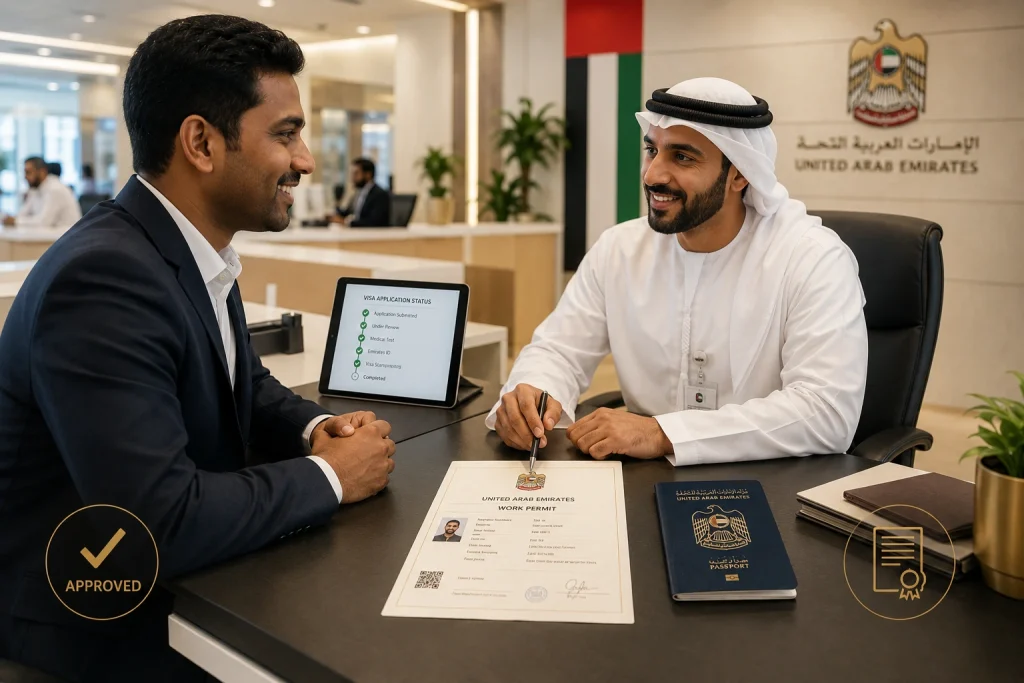
Moving to the UAE for work is a goal for many professionals around the world.
Some people come for career growth. Others are attracted by the opportunity to work in international environments, gain experience in growing industries, or build a better long-term future.
The UAE continues to attract professionals across sectors including technology, healthcare, construction, hospitality, education, finance, marketing, and business services.
But before packing your bags and preparing for your new role, there’s one important step you need to understand: the UAE Working Visa.
If this is your first time applying for a work visa in the UAE, the process may seem confusing at first.
You might be wondering:
Do I apply myself or does the company handle it?
What documents are needed?
How long does the process take?
Can I switch jobs later?
These are common questions—and understanding the process early can make your move much smoother.
This guide explains what a UAE Working Visa is, who needs one, how the application process works, common requirements, and what to expect before starting your career in the UAE.
What Is a UAE Working Visa?
A UAE Working Visa is an authorization that allows foreign nationals to legally live and work in the United Arab Emirates.
In most situations, employment and residency are connected through an employer-sponsored process.
Simply put:
- Your work authorization allows you to work legally
- Your residency status allows you to live legally in the country
These steps are usually connected and completed as part of the employment process.
For many professionals, the employer manages a large portion of the application process, which makes relocation easier than expected.
However, employees still play an important role by preparing documents, attending appointments when required, and providing accurate information.
Why Is a UAE Work Visa Important?
It can be tempting to focus only on securing a job offer and overlook the visa process.
But the visa is what officially allows employment to begin.
Without proper authorization, working legally becomes difficult and may create unnecessary complications.
Understanding your visa process helps you:
- Plan relocation timelines
- Prepare documents in advance
- Avoid delays
- Understand employer expectations
- Start employment with confidence
The more prepared you are, the smoother your transition into life in the UAE will be.
Who Needs a UAE Working Visa?
If you are moving to the UAE from another country for employment, you will generally need the appropriate work authorization and residency process.
This applies across many industries and job levels.
Common examples include:
- Office professionals
- Engineers
- Healthcare workers
- Hospitality employees
- Marketing specialists
- Teachers
- Finance professionals
- Technical experts
- Skilled workers
Your exact process may vary depending on your employer structure and employment arrangement.
For most people, however, the overall journey follows a similar path.
Types of UAE Work Visa Pathways
When people hear the term “work visa,” they often assume there is only one option.
In reality, the UAE offers different pathways depending on professional goals and employment structures.
Understanding these options helps you identify which category may fit your situation.
Standard Employment Visa
This is the most common route for professionals moving to the UAE.
Under this setup:
- A company offers employment
- The company manages sponsorship procedures
- Employment authorization is processed
- Residency arrangements are completed
This route is popular because it provides a structured process and clear employer support.
For people relocating for full-time employment, this is often the starting point.
Flexible and Independent Work Options
Work trends continue to evolve.
Some professionals today prefer more flexible working arrangements rather than traditional full-time employment.
Certain pathways support:
- Independent professionals
- Skilled workers
- Flexible employment structures
These options can appeal to professionals seeking greater career flexibility.
Freelance and Specialized Work Models
Freelancing has also become increasingly popular.
Professionals working independently may explore available freelance-related pathways depending on their services and long-term goals.
This option is commonly considered by:
- Designers
- Consultants
- Writers
- Developers
- Marketing specialists
- Creative professionals
Choosing the correct pathway early can help avoid unnecessary changes later.
UAE Work Visa Requirements
One of the first things applicants ask is:
“What documents do I need?”
The exact answer depends on your job and employer, but there are several requirements that appear regularly.
The best approach is to prepare early.
Basic Eligibility Requirements
Most applicants are commonly expected to provide:
- A valid passport
- Employment confirmation
- Supporting identification documents
- Educational or professional records where applicable
Some industries may require additional approvals depending on the role.
Preparing these documents ahead of time can save time later.
Documents You May Be Asked to Prepare
Document requests vary, but commonly requested items may include:
- Passport copies
- Recent photographs
- Employment documentation
- Educational certificates
- Professional qualifications
- Additional supporting records
Keep digital and physical copies organized.
Small administrative mistakes can create unnecessary delays.
Employer and Employee Responsibilities
Many people assume the company handles absolutely everything.
While employers often manage major administrative stages, employees still have responsibilities.
Employees commonly support the process by:
- Providing accurate information
- Submitting documents on time
- Completing required procedures
- Responding quickly to requests
Good communication between employee and employer often makes the process easier.
How to Apply for a UAE Working Visa
The application process feels less overwhelming when broken into simple steps.
Although timelines vary, understanding the general process can help you plan.
Step 1: Secure a Job Offer
Everything usually begins with employment confirmation.
Before moving forward:
- Review contract details
- Understand compensation
- Confirm employment terms
- Clarify expectations
Do not rush through this stage.
Understanding your offer creates a stronger foundation for relocation.
Step 2: Begin Employment Processing
After confirmation, the employer generally starts the administrative process.
This may involve:
- Employment approvals
- Initial authorization stages
- Supporting documentation
During this phase, staying responsive helps avoid delays.
Step 3: Complete Required Procedures
Depending on your category, additional procedures may follow.
These may involve:
- Identity verification
- Administrative processing
- Supporting approvals
Pay attention to instructions and timelines.
Missing deadlines can extend processing periods.
Step 4: Final Approval and Residency Completion
Once required stages are completed:
- Employment authorization becomes active
- Residency arrangements are finalized
- You can continue with relocation and onboarding
At this point, you can focus more on settling into your new environment.
How Long Does the UAE Work Visa Process Take?
Processing times vary.
There is no single timeline because multiple factors influence approval speed.
Examples include:
- Employer readiness
- Documentation accuracy
- Administrative processing
- Verification requirements
One of the easiest ways to avoid delays is preparation.
Have your documents ready before they are requested.
Cost Considerations
People often ask:
“How much does a UAE work visa cost?”
The answer varies depending on several factors.
Potential expenses may relate to:
- Administrative processing
- Documentation requirements
- Employer procedures
- Supporting services
Employers commonly provide guidance on applicable arrangements.
Before making assumptions, clarify expectations early.
Benefits of Working in UAE
People choose the UAE for many reasons beyond employment.
The country continues to attract professionals because of both career and lifestyle opportunities.
Career Growth Opportunities
Working in the UAE often gives professionals exposure to:
- International business environments
- Diverse teams
- New industries
- Global standards
For many people, this experience strengthens long-term career development.
Professional Networking
One advantage professionals frequently mention is access to international connections.
Working with people from different backgrounds creates opportunities to:
- Build relationships
- Learn new approaches
- Expand professional networks
Those relationships may continue creating opportunities long after a job ends.
Lifestyle Advantages
Professional growth is only one part of the experience.
People also value:
- Modern infrastructure
- Global connectivity
- Diverse communities
- Access to services
Lifestyle priorities differ for everyone, but these factors continue to attract professionals.
Common Mistakes to Avoid During the Process
Many delays happen because of small mistakes.
Being aware of common issues can save time.
Assuming the Process Starts After Arrival
Preparation often starts earlier than people expect.
Waiting until the last minute creates pressure.
Begin planning as soon as employment discussions become serious.
Submitting Incomplete Information
Incomplete documentation is one of the most common reasons for delays.
Double-check:
- Names
- Dates
- Supporting records
- Expiration dates
Accuracy matters.
Not Asking Questions
Do not assume.
If something is unclear:
- Ask your employer
- Request clarification
- Confirm timelines
Clear communication reduces confusion.
Focusing Only on Relocation
Many people become so focused on moving that they forget practical preparation.
Think ahead about:
- Housing
- Transportation
- Budgeting
- Daily life planning
Relocation becomes easier with preparation.
Frequently Asked Questions
Can Family Members Join Later?
Family arrangements may depend on eligibility and current procedures.
Review available options carefully.
Can You Change Jobs in UAE?
Career transitions may be possible depending on employment arrangements and applicable processes.
Understanding your employment terms early helps.
Can You Start Working Immediately?
Work should begin only after completing the required authorization process.
Always confirm your status before starting.
Is It Difficult to Get a UAE Work Visa?
The process often feels easier once you understand the steps.
Preparation, organization, and communication usually make the biggest difference.
Final Thoughts
Starting a new job in another country is a major step.
Along with excitement, there are usually questions, paperwork, and planning involved.
Understanding the UAE Working Visa process early helps reduce uncertainty and allows you to focus on preparing for your next chapter.
The goal is not to memorize every rule.
It is to understand the process, stay organized, communicate clearly, and prepare ahead of time.
With the right planning and realistic expectations, your move to the UAE can feel much more manageable—and much more exciting.
Every career journey starts somewhere.
For many professionals, understanding the visa process is simply the first step.