
Not long ago, the idea of earning money by working online for clients around the world felt out of reach for most people.
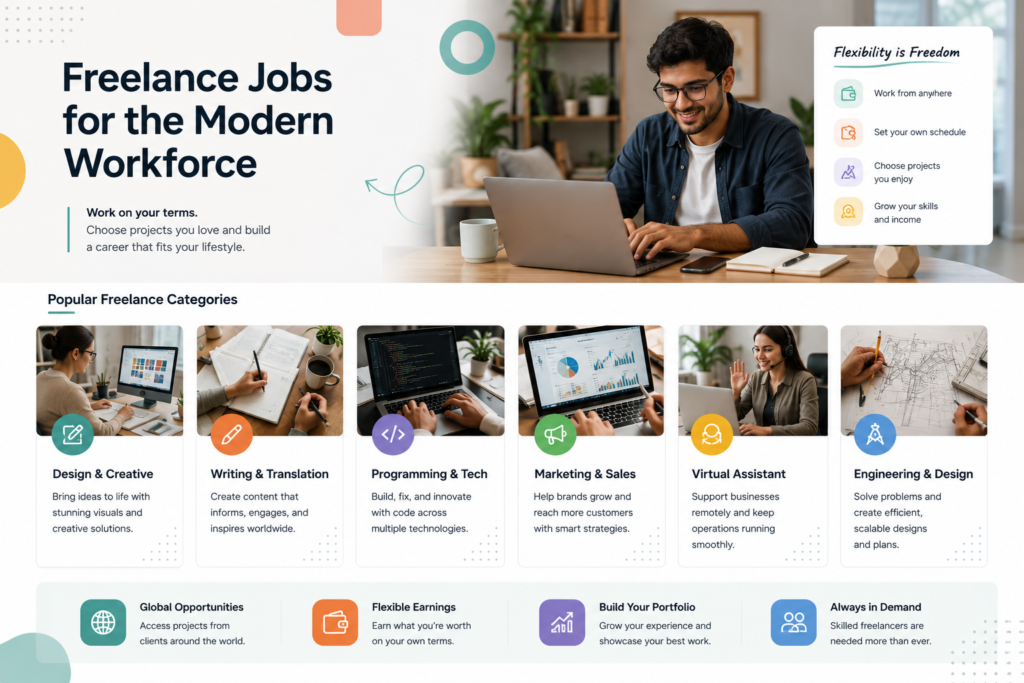
Today, it has become part of everyday life.
People are building full-time careers, side businesses, and additional income streams without working in a traditional office. Some freelance to create flexibility. Others want more control over their time. And for many, freelancing becomes an opportunity to turn existing skills into real income.
What makes all of this possible is the rise of freelancing sites.
These platforms have made it easier than ever to connect with clients, find projects, manage payments, and grow professionally from almost anywhere.
But there’s one thing many people discover quickly.
Creating an account on a freelancing site is easy. Building consistent income takes strategy, patience, and a willingness to improve.
If you’ve been thinking about freelancing—or you already started but are not seeing results—this guide will help you understand how freelancing sites work and how to build a stronger foundation for long-term success.
What Is a Freelancing Site?
A freelancing site is an online platform where businesses and independent professionals work together.
Instead of hiring full-time employees, companies post projects and hire freelancers to complete specific work.
Freelancers create profiles that showcase their experience, services, and portfolio. Clients review profiles and select people who match their needs.
In simple terms, freelancing sites act as a bridge between skills and opportunities.
Most platforms also simplify the process by managing things like:
- Project listings
- Messaging and communication
- Contracts and agreements
- Payment processing
- Reviews and ratings
This structure creates more convenience and security for both freelancers and clients.
For someone getting started, that can remove many of the challenges that traditionally came with independent work.
Why Freelancing Has Become So Popular
Freelancing is growing because people want more flexibility and more options.
For years, career success was often connected to one path: get a job, work fixed hours, and grow within a company.
Now, many professionals are realizing there are different ways to work.
Freelancing offers something people value more and more choice.
You may choose:
- Who you work with
- What services you offer
- How much work you accept
- Where you work from
- What schedule fits your life
Of course, that freedom also comes with responsibility.
You become responsible for finding work, managing time, and maintaining quality.
But for many people, that trade-off feels worthwhile.
The Flexibility Is Real—But It Requires Structure
One reason freelancing attracts so many people is flexibility.
There’s no single schedule.
You may work mornings.
You may work evenings.
You may take weekdays off and work weekends.
But flexibility does not automatically mean less work.
Successful freelancers often build routines and systems to stay productive.
The difference is that they design those routines themselves.
You Can Work Beyond Your Local Market
Freelancing changes how opportunities work.
In a traditional setting, opportunities are often tied to where you live.
Online freelance work removes many of those limits.
A content writer can support a startup overseas.
A designer can work with international brands.
A developer can build products for clients in multiple countries.
That access creates possibilities that were difficult to imagine only a few years ago.
Freelancing Can Grow With You
Many people start freelancing expecting quick results.
In reality, freelance growth usually happens gradually.
The first milestone might simply be getting one client.
Then:
- Building confidence
- Improving quality
- Increasing rates
- Developing repeat business
Over time, small progress compounds.
How Freelancing Sites Actually Work
Freelancing platforms may look overwhelming at first, but the process itself is usually straightforward.
Step One: Build Your Profile
Your profile is often your first impression.
Think of it as your professional storefront.
Clients want to understand:
Who are you?
What do you do?
Why should someone trust you?
Good profiles are usually simple.
They explain:
- Services
- Experience
- Results
- Portfolio examples
Many people make the mistake of trying to sound impressive.
Clear communication usually works better.
Step Two: Search for Opportunities
Clients post projects with details such as:
- Budget
- Timeline
- Scope
- Expectations
New freelancers sometimes apply to everything.
That usually leads to frustration.
A better approach is focusing only on projects that match your skills.
Quality applications tend to outperform quantity.
Step Three: Send Proposals
Your proposal is your introduction.
A common mistake is writing proposals that talk only about yourself.
Clients care most about one thing:
Can you solve the problem?
Strong proposals usually:
- Mention the project
- Show understanding
- Offer a practical approach
- Keep communication concise
Step Four: Deliver Great Work
Winning the project is only the beginning.
Long-term freelance success often comes from:
- Reliability
- Communication
- Consistency
- Professionalism
Clients remember the experience of working with you.
Choosing the Right Freelancing Site
Many beginners sign up for every platform they find.
That often spreads attention too thin.
Instead, choose one or two platforms and learn them properly.
When deciding where to start, consider these factors.
Competition
Some platforms have large audiences.
That means more opportunity but also more competition.
Do not interpret competition as failure.
Every freelancer started without reviews at some point.
Industry Fit
Choose platforms that align with your skills.
Popular categories include:
- Content writing
- Design
- Development
- Marketing
- Administration
- Consulting
- Video editing
A better match often leads to better opportunities.
Fees and Payments
Understand:
- Platform fees
- Withdrawal processes
- Payment timing
Knowing the financial side helps avoid surprises.
Quality of Clients
Good clients usually value expertise and communication—not only low prices.
Look for environments that support professional relationships.
How to Create a Freelancer Profile That Feels Trustworthy
Your profile matters more than your years of experience in many cases.
Clients often make decisions quickly.
A strong profile builds trust.
Use a Professional Photo
You do not need expensive equipment.
You simply want to appear professional and approachable.
Choose:
- Good lighting
- Clear visibility
- Clean background
Avoid:
- Cropped group photos
- Heavy editing
- Informal pictures
Write a Clear Headline
Your headline should immediately explain your value.
Instead of:
Freelancer
Try:
SEO Writer | Blog Content | Long-Form Articles
Specific profiles usually attract stronger opportunities.
Write Like a Human
Many freelancer bios sound robotic.
Avoid phrases like:
Results-driven professional with excellent communication.
Instead explain:
What you do.
Who you help.
What outcomes you focus on.
Simple language feels more credible.
Show Examples of Your Work
Even one strong example helps.
Your portfolio might include:
- Sample projects
- Personal projects
- Mock assignments
- Client work
- Case studies
People trust what they can see.
How to Get Your First Freelance Client
Getting started is often the hardest stage.
Most freelancers experience rejection early.
That does not mean you are doing something wrong.
It means you are learning.
Apply Intentionally
Sending hundreds of applications rarely creates better results.
Spend more time understanding projects.
Write stronger proposals.
Choose opportunities carefully.
Focus on Client Outcomes
Clients usually care less about credentials and more about outcomes.
Instead of:
“I am hardworking.”
Show:
“I can help improve your website content and increase engagement.”
Specific language feels stronger.
Deliver More Than Expected
Your first clients matter.
Positive experiences can create:
- Reviews
- Referrals
- Repeat work
Small projects can become long-term relationships.
Mistakes That Hold Freelancers Back
Many freelance challenges come from habits rather than lack of talent.
Charging Too Little
Low pricing may seem like a shortcut.
But it often creates:
- Unrealistic workloads
- Difficult projects
- Limited growth
Price responsibly.
Poor Communication
Clients notice communication.
Respond clearly.
Set expectations.
Update progress.
Communication creates trust.
Trying to Do Everything
Broad positioning often makes decision-making harder.
Instead of:
Marketing Services
Try:
Email Marketing for Ecommerce Brands
Specialization creates clarity.
Expecting Immediate Success
Freelancing is rarely instant.
Progress builds gradually.
Stay consistent.
How to Build a Long-Term Freelance Career
Freelancing becomes more sustainable when you stop thinking project-to-project.
Build Relationships
Strong client relationships reduce stress.
Reliable freelancers often receive repeat work.
Focus on:
- Quality
- Reliability
- Professionalism
Continue Learning
Markets evolve.
Invest in:
- New skills
- Training
- Industry updates
Growth creates opportunity.
Diversify Your Income
Over time, many freelancers expand into:
- Retainers
- Consulting
- Products
- Coaching
Multiple income streams improve stability.
Final Thoughts
Freelancing sites have created opportunities that give people more flexibility and more control over how they work.
But freelancing is not simply about creating a profile and waiting.
It is about showing up consistently.
Learning.
Improving.
Building trust.
Creating value.
Start small.
Choose one platform.
Build your profile.
Apply thoughtfully.
Deliver excellent work.
Your first project may not change everything.
But it can become the starting point for something much bigger.