If you’ve been applying for jobs in the Gulf and not hearing back, your LinkedIn profile could be one of the reasons.
Many professionals spend hours applying to vacancies across the UAE, Saudi Arabia, Qatar, Kuwait, Oman, and Bahrain—but overlook the fact that recruiters often search for candidates directly on LinkedIn before reviewing applications.
Your profile has become more than an online resume. It acts as your professional first impression, personal brand, and search engine profile all at once.
The good news? You do not need thousands of followers, premium subscriptions, or daily posts to make LinkedIn work for you.
A well-optimized profile can help recruiters find you, understand your experience quickly, and feel confident reaching out.
In this guide, you’ll learn how to optimize your LinkedIn profile specifically for Gulf jobs and improve your chances of attracting opportunities across the GCC.
Why LinkedIn Matters More Than Ever for Gulf Job Seekers
The Gulf job market has changed significantly over the last few years.
Recruiters are no longer depending only on job portals or referrals. Today, hiring teams actively search LinkedIn for candidates who match their requirements. Even before publishing openings publicly, recruiters often create candidate lists directly from LinkedIn searches.
That means your profile needs to do two things:
- Appear in recruiter searches
- Convince recruiters to keep reading once they find you
Many candidates struggle with this because they treat LinkedIn like a digital CV. They upload a photo, list previous jobs, and leave it untouched for months.
Recruiters are looking for something more.
They want profiles that clearly communicate:
- Professional expertise
- Industry relevance
- Measurable achievements
- Skills and certifications
- Career direction
If your profile does not explain who you are and what value you bring within a few seconds, recruiters may move to the next profile.
Start with a Strong First Impression
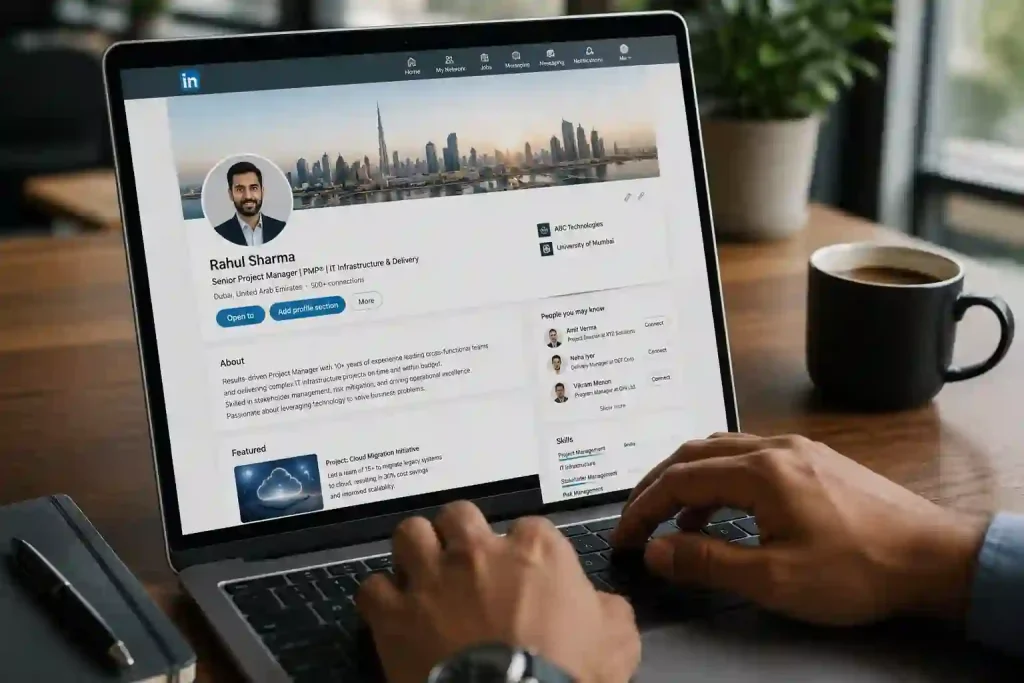
Before anyone reads your experience or skills, they notice your profile photo, headline, and banner.
These three areas create the first impression.
Choose a Professional Profile Photo
You do not need studio photography.
What matters is appearing professional and approachable.
A good LinkedIn profile photo should:
- Be recent
- Show your face clearly
- Use clean lighting
- Avoid distracting backgrounds
- Match your industry expectations
For example, someone in finance may choose a formal business photo, while a creative professional may use a more relaxed but polished image.
Avoid:
- Vacation pictures
- Group photos
- Heavy filters
- Low-resolution images
Use the Banner Space Strategically
The banner is often ignored, but it can strengthen your professional identity.
You can include:
- Industry visuals
- Professional achievements
- Certifications
- A simple brand statement
- Your area of expertise
Think of it as additional context rather than decoration.
Write a Headline That Helps Recruiters Find You
Your headline is one of the most powerful sections on LinkedIn.
Many people waste it.
Common examples include:
“Seeking Opportunities”
“Open to Work”
“Experienced Professional”
These headlines do not tell recruiters enough.
Instead, create a headline that combines your role, specialization, and value.
Examples:
Civil Engineer | Project Delivery | Infrastructure & Construction
Digital Marketing Specialist | SEO | Paid Media | GCC Market Experience
Finance Manager | Budget Planning | Financial Analysis
A strong headline should answer three questions:
- What do you do?
- What are you skilled in?
- What type of opportunities are relevant to you?
This also improves your visibility in LinkedIn search results.
Make Your About Section Sound Human
One of the biggest mistakes job seekers make is writing an About section that sounds robotic.
Recruiters are reading profiles all day.
Your goal is not to sound impressive—it is to sound clear.
A simple structure works best.
Introduce Yourself
Briefly explain:
- Years of experience
- Industry background
- Areas of focus
Example:
“I’m a logistics professional with over seven years of experience managing supply chain operations and improving delivery efficiency across regional markets.”
Highlight Your Strengths
Focus on results and capabilities.
Examples:
- Leading teams
- Delivering projects
- Improving processes
- Managing stakeholders
End with Direction
Tell people what type of opportunities interest you.
Keep the tone natural.
Avoid writing long paragraphs full of corporate buzzwords.
Turn Your Experience Section into Proof of Value
Your experience section should answer one question:
Why should someone hire you?
Many profiles list responsibilities.
Recruiters want outcomes.
Compare these examples.
Weak:
Managed customer relationships.
Better:
Managed relationships with 120+ clients and improved customer retention by 18%.
Weak:
Worked on marketing campaigns.
Better:
Developed and executed campaigns that increased qualified leads by 35%.
Where possible, include:
- Percentages
- Revenue impact
- Time savings
- Team size
- Project outcomes
Numbers create credibility.
If exact figures are confidential, estimate responsibly or describe scale.
Use Skills and Keywords That Match Gulf Hiring Trends
LinkedIn functions like a search engine.
Recruiters search using keywords.
If those keywords are missing from your profile, your visibility may decrease.
Review job descriptions in your target industry and identify repeated skills.
Examples include:
For Technology:
- Cloud Computing
- SQL
- Cybersecurity
- Data Analysis
For Construction:
- Project Planning
- AutoCAD
- Site Management
For Marketing:
- SEO
- Google Analytics
- Content Strategy
For Operations:
- Supply Chain
- Process Improvement
- Vendor Management
Add skills naturally across:
- Headline
- About section
- Experience
- Skills section
Do not stuff keywords unnecessarily.
Build Trust Through Recommendations and Certifications
Recruiters often compare candidates with similar experience.
Recommendations and certifications can help strengthen credibility.
Ask for Recommendations
Reach out to:
- Former managers
- Clients
- Team leaders
- Colleagues
Ask them to mention:
- Projects completed
- Results achieved
- Collaboration experience
Specific recommendations feel more authentic than generic praise.
Add Relevant Certifications
Professional development shows initiative.
Examples include:
- Project management certifications
- Technical courses
- Industry-specific training
- Language certifications
Only include certifications that support your career goals.
Use LinkedIn Activity to Stay Visible
You do not need to become a content creator.
But showing occasional activity helps.
Simple ways to stay active:
- Comment thoughtfully on industry posts
- Share insights from projects
- Celebrate certifications
- React to relevant updates
- Publish short professional observations
The goal is consistency.
Even 10–15 minutes per week can help maintain visibility.
Recruiters often check whether candidates appear engaged and current.
Network Intentionally Instead of Randomly
One common mistake is sending hundreds of connection requests with no purpose.
Networking works better when done intentionally.
Focus on connecting with:
- Recruiters
- Hiring managers
- Industry peers
- Alumni
- Professionals in target companies
When sending connection requests:
Keep messages short.
Example:
“Hello, I work in project management and would appreciate connecting to stay updated on opportunities and industry insights.”
Avoid immediately asking for jobs.
Build professional relationships first.
Common LinkedIn Mistakes That Reduce Job Opportunities
Even experienced professionals make avoidable mistakes.
Incomplete Profiles
Missing sections reduce trust.
Complete:
- Headline
- About
- Experience
- Skills
- Certifications
Generic Applications
Applying to hundreds of jobs without improving your profile usually produces limited results.
Combine:
- Applications
- Networking
- Profile optimization
Ignoring Messages
If recruiters contact you:
- Respond professionally
- Reply promptly
- Keep communication clear
Even if the role is not suitable, maintaining professionalism can create future opportunities.
Not Updating Profiles
Your LinkedIn profile should evolve.
Update regularly:
- Achievements
- New skills
- Certifications
- Promotions
Small updates keep your profile active.
Advanced Tips to Improve Recruiter Visibility
Once your profile foundation is strong, take it further.
Use the Featured Section
Show evidence of your work.
Add:
- Portfolios
- Presentations
- Case studies
- Published articles
- Project examples
Turn On Job Preferences
Use LinkedIn job preferences to signal availability.
Set:
- Target job titles
- Locations
- Employment type
Review Analytics
Track:
- Search appearances
- Profile visits
- Engagement
If activity is low, revisit your keywords and headline.
Final Thoughts
Getting a job in the Gulf is not only about sending more applications. It is about becoming easier to discover. A strong LinkedIn profile helps recruiters understand who you are, what you bring to the table, and whether you fit their hiring needs.
Start small. Update your headline today. Rewrite your About section this week.
Improve your experience section next.
Over time, these improvements can create more profile views, recruiter conversations, and interview opportunities.
Your LinkedIn profile should work for you even when you are not actively applying.